How to Verify a Graded Pokemon Card Before You Buy
By Lee, founder of ChaseBoard8 min read
Published October 17, 2026. Updated October 17, 2026.
The short answer
Find the cert number on the label in the listing photo. Look it up on the grader's own website, and check that every detail matches: the card, the set, the number, the variety and the grade. Then put the grader's images, when it has them, next to the seller's photos, and look at the holder and label for signs of tampering. A matching cert proves the number is real. It does not prove the slab in the photo is the original, so the photos and the seller still matter.
What a cert check proves, and what it doesn't
Every slab from PSA, CGC, Beckett (BGS) or TAG carries a certification number that the grader records in its own database (see Cert number (certification number) and Slab). Looking it up answers one question: was this number issued, and for which card and grade?
It does not prove that the plastic and paper in the photo are the ones the grader made. PSA says so on its own lookup page: verification does not eliminate risk, because criminals do attempt to counterfeit PSA labels using real cert numbers taken from public sources.
So a full check has four steps: the number, the lookup, the match, and the holder. Do all four, in that order.
Step 1: Get the cert number from the listing
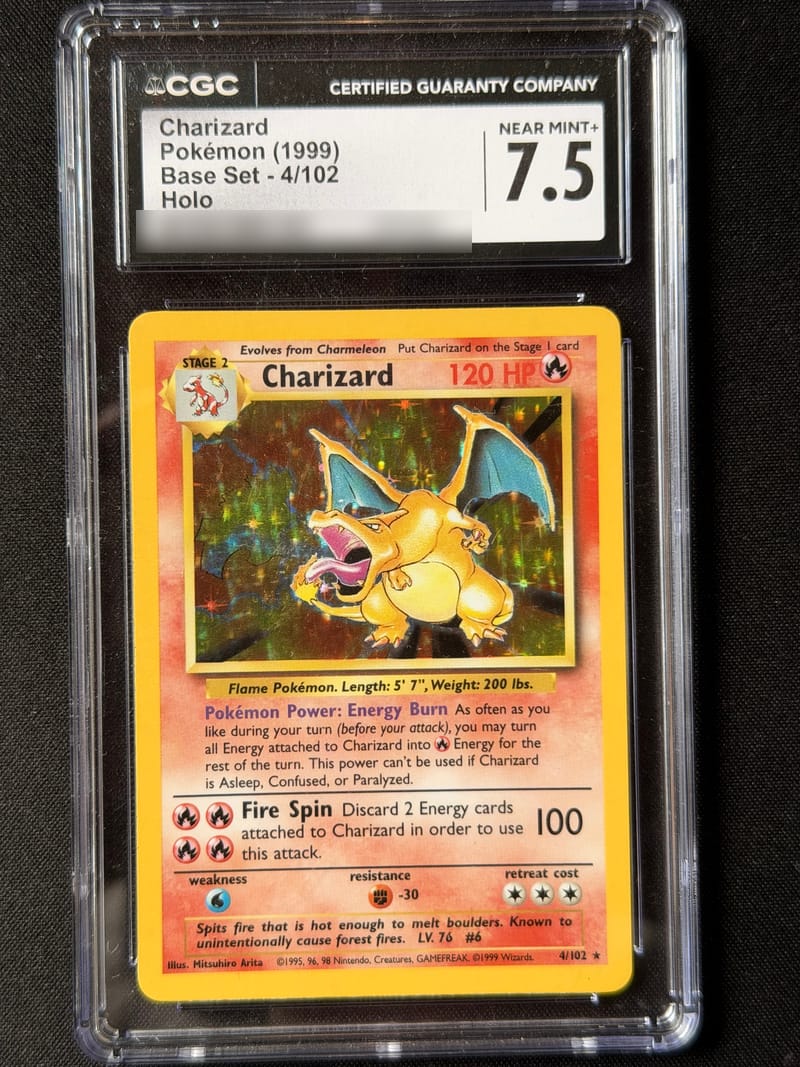
Read it off the label in the photo. The number is printed on the front of the label. If the photo is too small or blurry to read it, that is your first question for the seller.
Check the item specifics. eBay asks sellers of graded cards to add the grader, the grade and the certification number, but the number is only recommended, so many listings leave it out.
Make sure the two agree. If the description and the label show different numbers, ask why before you go further.
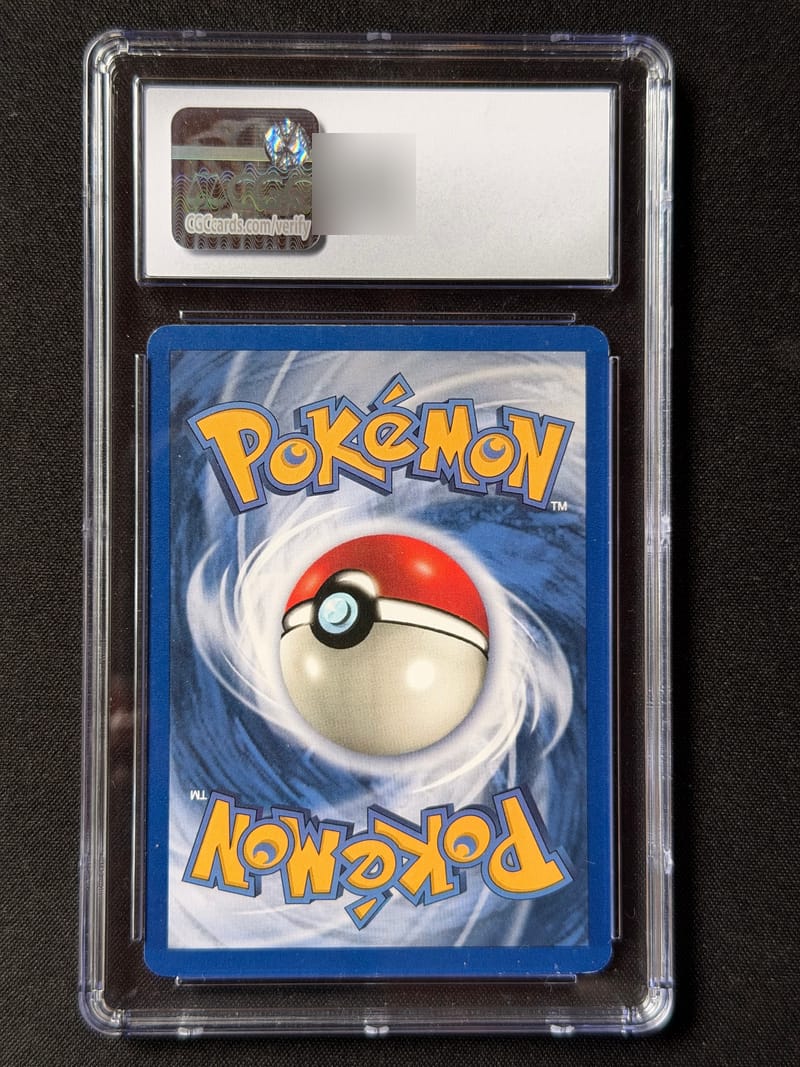
Ask for the back of the slab. Current PSA and CGC labels carry a QR code on the back. If the listing doesn't show it, ask the seller for a photo.
Step 2: Look it up on the grader's own site
Type the number into the grader's own lookup yourself, not a link or screenshot from the seller. You want what the grader recorded, not what the seller shows you.
| Grader | Where to look it up | What you get | Images |
|---|---|---|---|
| PSA | psacard.com/cert | Year, set (brand/title), card name (subject), card number, variety, grade and label type | Front and back scans for many slabs, from PSA's SecureScan imaging. Not every cert has them |
| CGC | cgccards.com, "Verify Certification" | The card's certification details | CGC says it images every card it grades and shows the images on its site |
| BGS (Beckett) | beckett.com/grading/card-lookup | A cert lookup for BGS, BVG and BCCG slabs | Not confirmed |
| TAG | taggrading.com, "Cert # Search", or scan the slab with a phone | The DIG report: images, identified defects, scores and centering | Yes, in the report |
A note on Beckett. Beckett says its website and app went offline after what it called suspicious technical activity, and that its online tools may be unavailable. The lookup above is described from an archived copy of Beckett's page. If Beckett's lookup won't load, ask the seller for sharp photos of the slab's front and back, and lean harder on the seller's record and, for $200 or more, eBay's Authenticity Guarantee.
Step 3: Match every line, then the images
A cert that exists is not enough. Check that it is the card in the listing.
Card name and card number. The lookup's card number should match the number printed on the card in the photo (see Card number (set number)). A cert for a different card in the same set is a common way for a number to "look right" at a glance.
Set and year. The same Pokemon appears in many sets. The set name on the cert should be the set you are paying for.
Variety. This is where 1st Edition, Shadowless and holo versions are recorded (see First edition (1st Edition) and Shadowless). If the title says 1st Edition, the cert should too.
Grade. The grade on the cert should match the label in the photo, including any qualifier such as OC (see PSA grading scale).
Images. When the grader has images, put them next to the seller's photos. Look at things that don't change: centering, a mark on the border, the holo pattern, a print line. They should be the same card.
Label style. PSA's lookup shows the label type. PSA introduced its current label in 2017, with a wave pattern of "fugitive ink" in the background and a Lighthouse hologram. If the cert describes the newer label but the photo shows an old plain one, or the other way round, ask the seller.
If anything does not match, stop there. A wrong photo may be an honest mistake, but that is the seller's to explain, not yours to assume.
Step 4: Check the holder and the label in the photos
PSA describes its holder as tamper-evident, not tamper-proof. It is sealed by a sonic weld, and breaking it leaves traces. This is what PSA says to look for:
"Frosting" along the edges, where the clear plastic turns cloudy, and sometimes small cracks. This can show in a good photo, so ask for close shots of all four edges.
A holder that flexes or pops open at the edge. You can only test this in hand, so do it the day the slab arrives.
A label you can't see through. Held to a strong light, a real PSA label lets you see the text on the other side. A fake front glued onto a real label is too thick for that. This one is in hand only too.
The hologram. On current PSA labels, tilting the slab makes the Lighthouse logo hide and reveal a pattern behind it. Ask the seller for a short tilt video.
CGC and TAG do it differently. CGC says its labels carry microprinting, UV ink, holographic foil, a unique cert number and barcode, and a QR code on the back, in an ultrasonically welded case. TAG has no paper label at all: the grade is inscribed inside the slab, and TAG says every slab carries digital security you can check with a phone. See PSA vs CGC vs BGS vs TAG for Pokemon Cards for how the labels differ.
Most of these checks need the slab in hand. Online, you only have the photos, which is why the first three steps carry so much weight.
When something doesn't add up
Ask the seller for a clear photo of the label front and back, all four edges, or a short video. A seller with a real slab can usually send these.
Ask for PSA's confirmation. PSA says that if you are worried about an item before you buy, you can contact PSA to arrange a review, and that there is nothing wrong with making a deal depend on PSA's confirmation. It adds that a seller who hesitates may have already given you your answer.
Walk away if the number, the card and the photos still don't line up.
Where eBay's Authenticity Guarantee fits
For single cards sold for $200 or more (before tax and shipping), eBay's Authenticity Guarantee sends the card to an authenticator before it ships to you. For a graded card, the authenticator inspects the holder for signs of tampering and checks that the case and label are authentic to the grader. It does not regrade the card. If authenticity can't be verified, the card goes back to the seller and you get a refund.
Two limits matter for slabs. The guarantee accepts graded cards only from PSA, SGC, CGC (and CSG) and BGS, so a TAG slab is not on the list. And it is only for buyers in the United States. How to Spot a Fake Pokemon Card Before You Buy covers the guarantee and eBay's Money Back Guarantee in more detail.
How I check a slab
I always check the cert number on PSA's site before I buy, no matter what. I've never seen a cert that didn't match the card in the photo, though I haven't checked that many.
No card with the Authenticity Guarantee has ever failed on me. The guarantee only covers slabs that sell for $200 or more. Below that, I want a seller with at least 50 feedback, and I'd rather see 100 or more. Even at a high price, a seller with a lot of feedback can be fine without the guarantee.
When the slab arrives, I check the holder for scratches and its overall condition. Do the in-hand checks from Step 4 that same day too.
If you want the lookup one tap away, a ChaseBoard alert for a PSA slab links straight to PSA's cert page when the eBay listing gives the cert number, and a watch can be set to Authenticity Guarantee only.
A checklist before you buy a slab
Cert number readable in the photo, and the same as in the item specifics
Looked up on the grader's own site, typed in by you
Card name, card number, set, year and variety all match the listing
Grade and any qualifier match the label in the photo
Grader's images, when available, show the same card as the seller's photos
Label style matches what the lookup describes
Close photos of the edges, with no cloudy "frosting" or cracks
Label front and back shown, and for a PSA slab a tilt video if you have doubts
For $200 or more from PSA, CGC, BGS or SGC: the Authenticity Guarantee badge, or a reason you're fine without it
A seller record you are comfortable with
FAQ
Go to psacard.com/cert, type the cert number from the label and compare what comes back with the listing: card, set, number, variety, grade and, when PSA has them, the images. You can also scan the QR code on the back of a current PSA label.
Yes. PSA's cert lookup works without signing in or paying. It shows what PSA recorded for that number.
Yes. PSA warns that counterfeit labels sometimes use real cert numbers copied from public sources. That is why you also match the card and images, and check the holder.
Normally on Beckett's own card lookup. Beckett says its online tools may be unavailable. If the lookup won't load, ask the seller for sharp photos of the slab's front and back, check the seller's record, and use eBay's Authenticity Guarantee where it applies.
For single cards sold for $200 or more under its Authenticity Guarantee, yes: the authenticator checks the holder for tampering and that the case and label are authentic. It doesn't regrade. Graded cards from PSA, SGC, CGC and BGS qualify.
Look up the cert with CGC's Verify Certification tool and compare CGC's images of the card with the seller's photos. CGC says it images every card it grades.
Related
Sources
- PSA, Cert Verification, read October 9, 2026
- PSA, example cert result (field layout), read October 9, 2026
- PSA, Security: A Buyer's Guide, read October 9, 2026
- PSA, "PSA Labels Get New Look, New Technology", read October 9, 2026
- PSA, "PSA Adds Free 'SecureScan' Service", read October 9, 2026
- PSA, FAQ (SecureScan), read October 9, 2026
- CGC Cards, Grading Process, read October 9, 2026
- CGC Cards, Holder & Label, read October 9, 2026
- CGC Cards, Verify Certification, read October 9, 2026
- Beckett, Graded Card Lookup (archived copy of 2026-08-19), read October 9, 2026
- Beckett, service notice, read October 9, 2026
- TAG Grading, home page, read October 9, 2026
- eBay, Authenticity Guarantee for Trading Cards, read October 9, 2026
- eBay Seller Center, Selling trading cards, read October 9, 2026
Last reviewed October 9, 2026.
How this page was written: drafted with AI assistance from Lee's own answers, then checked claim by claim against the sources above.
About the author
Lee, founder of ChaseBoard
Lee buys Pokemon cards on eBay and builds ChaseBoard.