How to Crack a CGC Slab and Get the Card Out
By Lee, founder of Chaseboard8 min read
Published October 26, 2026. Updated October 26, 2026.
The short answer
To crack a CGC slab, I snip both top corners off with pliers, then work a screwdriver along the sides a little at a time until the case gives way. Wear eye protection, and go slowly and gently, because the screwdriver can slip in toward the card if you get too close.
Cracking a slab means opening a grading company's sealed case so you can take the card out and keep it raw. Once the case is open the grade is gone for good, since CGC's guarantee does not cover a card removed from its holder and PSA treats a removed card as if it had never been graded.
A slab is the sealed holder with the grader's label and cert number on it (see Slab), and a raw card is simply one that sits outside any grader's holder.
Why I crack mid-grade CGC slabs
I collect Base Set holos, and I want them raw, so I buy them in mid-grade CGC slabs, mostly 7.5 and 8, and crack them out. So far I've cracked 12: Charizard, Blastoise, Venusaur, Zapdos, Magneton, Gyarados, Nidoking, Clefairy, Alakazam, Raichu, Mewtwo and Poliwrath. Their labels run from a 7 on the Blastoise to an 8.5 on the Alakazam, though most of them say 7.5.
Five of those labels are CGC's blue "CGC Universal Grade" design and seven are the black "Certified Guaranty Company" one. Two of the blue ones, Blastoise and Venusaur, also carry subgrades, which are separate numbers for centering, surface, corners and edges. The Blastoise got a 9 for centering and a 6.5 for surface. Read the subgrades when a slab has them. Find the lowest one, then look for that flaw in the photos before you buy.
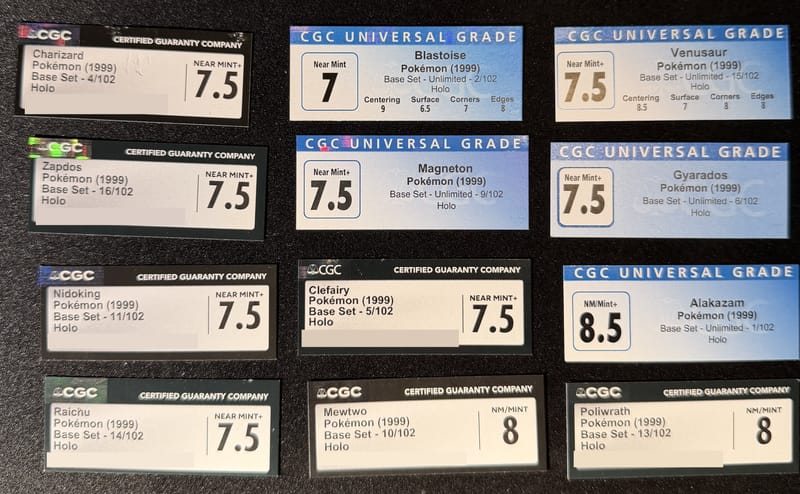
The Charizard was the hard one. It's a Base Set Unlimited Charizard 4/102 in a CGC 7.5, my grail, and it took me about two months to find the nerve to crack it, which is why it's the card in every step below.
All 12 of mine came out clean. A friend tried opening his first slab at my place, a Squirtle 1st Edition PSA 9, and damaged it completely, which I found funny at the time. So take your time with yours.
Check the slab before you crack it
Do every check while the case is still sealed, because once it's open there is no slab left to check and the label is just paper.
Look up the cert number. Type the number from the label into CGC's Verify Certification tool yourself, then match the card, set, number and grade to the slab in front of you (see Cert number (certification number)).
Look hard at the case. CGC's guarantee does not apply to counterfeit or tampered holders, so compare the holder and label with the checks in Verify a Graded Pokemon Card Before You Buy before you start.
Judge the card, not the number. CGC's scale says a 7.5 may have "a touch of wear on two or three corners or slightly rough edges", and that a trading card at that grade "could have a moderate defect or a number of small handling defects". An 8 "could have small-to-moderate handling defects". The label won't tell you which corners (how CGC's scale works is in CGC grading). I like vintage slabs with good centering, so I look at every corner and edge through the plastic and check the centering before I decide to crack one.
If anything looks wrong when the slab arrives, take it up with the seller while the case is still sealed.
Tools to crack a CGC slab
I use just two tools, and both show up in the photos below. Pliers snip the two top corners off the case, and a screwdriver works along the sides to pull it open a little at a time.
What you risk when you crack a slab
Read this box before the pliers come out, and crack only if you can live with all five points.
Before you crack anything:
Protect your eyes and go slowly. Eye protection is a good idea. Don't try to snap the case open at once; work gently and keep the screwdriver away from the card as you open it.
Expect the case to fight back. CGC describes its holder as a "sturdy, ultrasonically-welded case" that "resists impacts and tampering". Crack only a card you'd still want with a new mark on it.
Accept that the grade is gone for good. CGC's guarantee does not apply to a card removed from its holder, or to one whose holder has been "damaged, unsealed, tampered with, or altered". PSA treats a card taken out of its holder as if it had never been graded. Start only if you're ready to leave that grade behind.
Treat a regrade as a new opinion. A cracked card is a raw card, so you can submit it like any other raw card, and the grade that comes back is a new one. The one card I've had back from PSA so far came in a grade below what I expected (how PSA grading works, and what came back). Submit only if you're comfortable with a new grade.
Crack only what you're keeping. A raw card is judged on photos and the seller's word, not on a grade (see Raw or Graded Pokemon Cards: Which to Buy?). Open only a card you plan to keep raw.
How I crack a CGC slab, step by step
Here is how I opened the Charizard, one photo per step. Everything happens at the label end of the case, above the card.
Step 1: Look at the slab one last time
Check the label, the cert number and the card through the plastic once more. Then take photos of the slab, front and back, while it is still sealed.
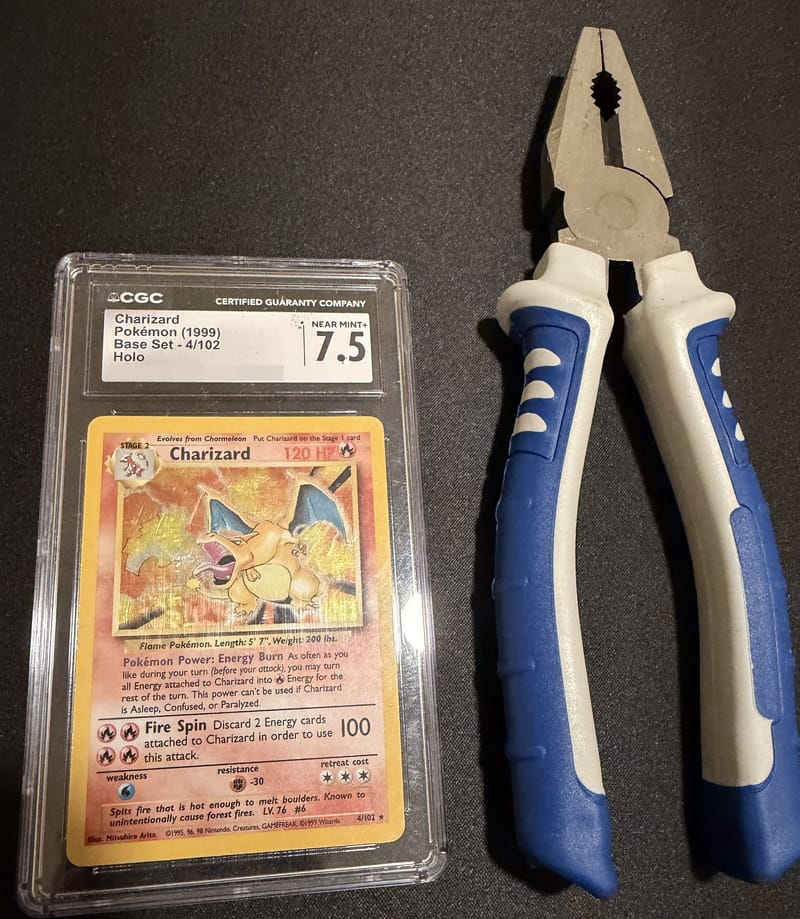
Step 2: Snip off both top corners
Grip one top corner of the case with the pliers, at the label end, and snip it off, then do the same to the other. Both cuts sit beside the label, well away from the card.
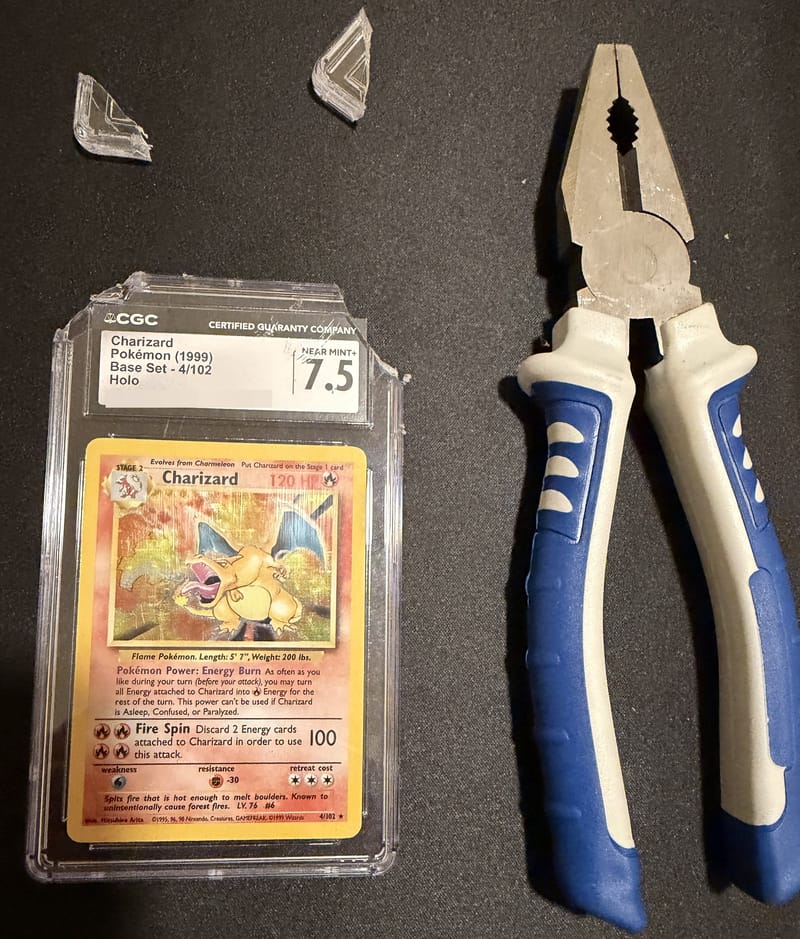
Step 3: Work the screwdriver along the sides
With the top corners gone, work the screwdriver along the sides a little at a time to pull the case open. Don't try to snap it apart at once, and don't get too close to the card, because near it the screwdriver can slip inside.
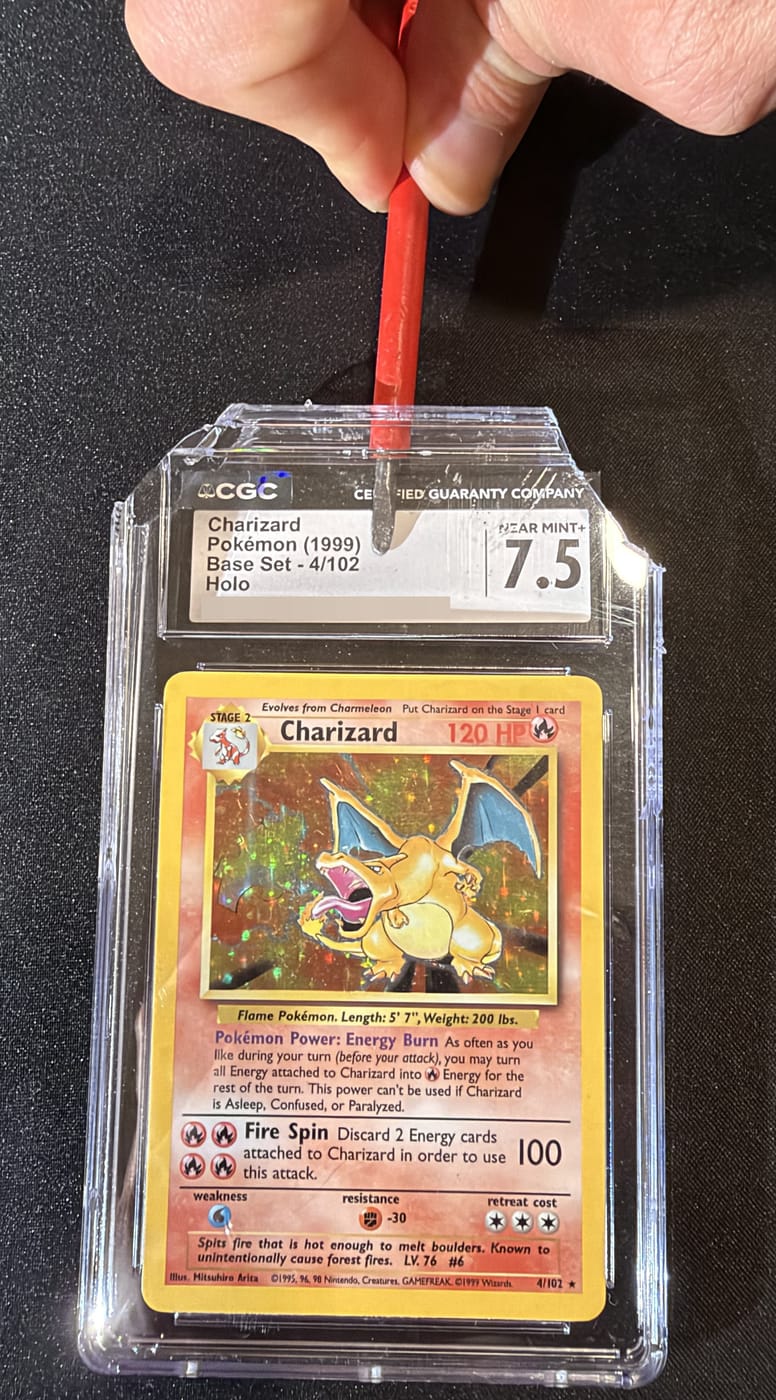
Step 4: If the plastic splits across the card
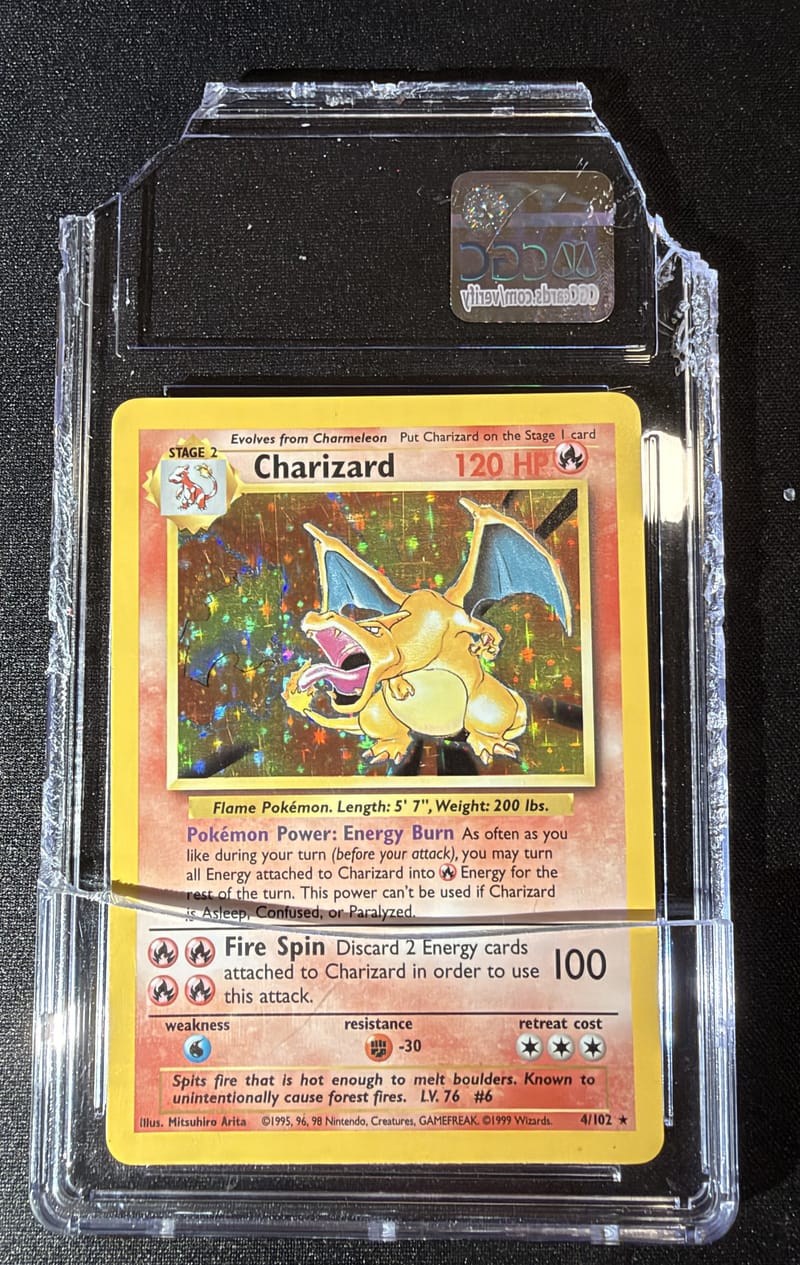
On my Charizard the case did not come apart cleanly. The top of the case came away, but the plastic split straight across the card, leaving the top half free and the bottom half still held in the case. That's the moment a card can get marked, since the broken edge of the plastic sits right on it. If yours splits like this, stop and move slowly, keeping the screwdriver away from the card. Mine still came out clean.
Step 5: Check the card front and back
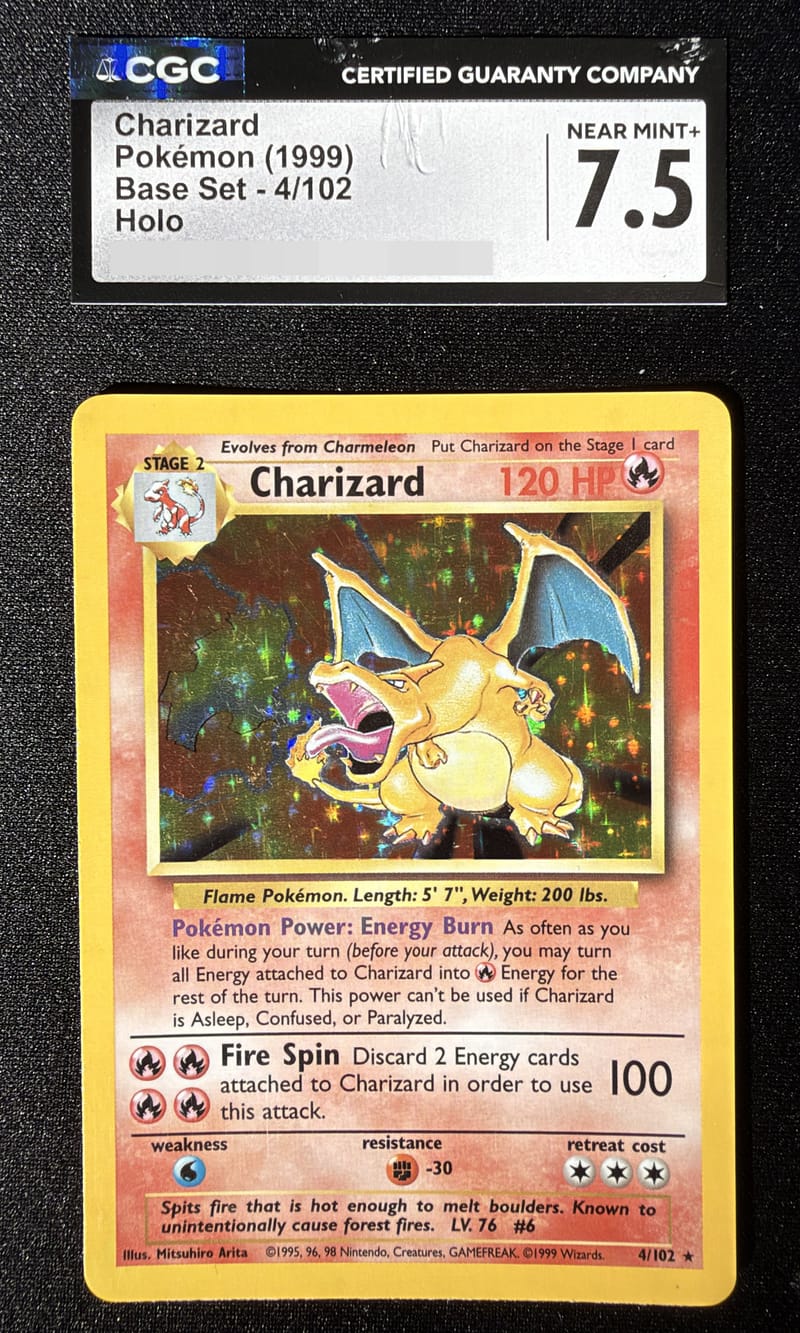
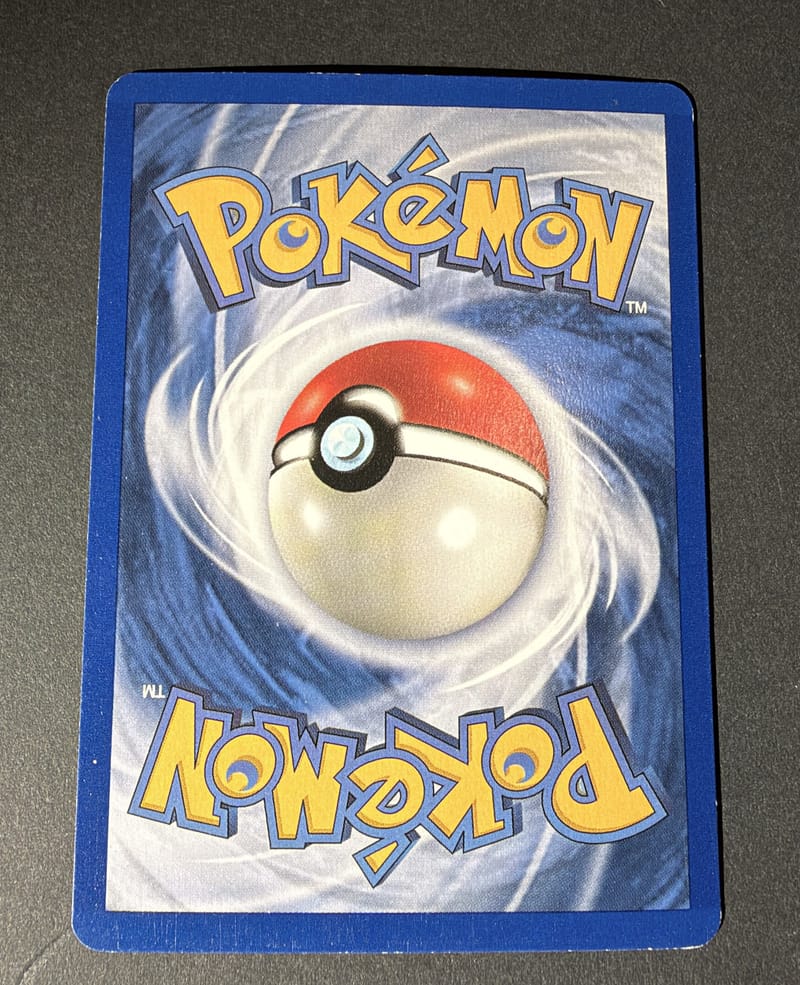
Once the card is out, look over its corners and edges, then flip it over and inspect the back. I pushed mine up toward the top a little before I flipped it. Here is my Charizard under the label it came with, and then its back.
Finding the slab you want
Watch the grades you'd crack. My Charizard came from a Chaseboard alert. On Chaseboard, a graded watch takes a grading company and one or more grades, so you can add a card like a Base Set holo with CGC 7.5 and 8 picked. Pick the grades you'd be willing to open when you set up your watch.
FAQ
Yes. CGC's guarantee does not apply to a card removed from a CGC holder, and PSA treats a card removed from its holder as if it had never been graded, so from then on it's a raw card.
It can be done, but there is always some risk. CGC describes its holder as an ultrasonically welded case that resists impacts and tampering, so opening one takes force. When I cracked my Base Set Charizard the plastic split across the card, and it still came out clean.
I use two: pliers to snip off both top corners of the case at the label end, and a screwdriver worked slowly along the sides to pull the case open.
Yes. Once it's out of the slab it's a raw card, so you can submit it like any other raw card. The grade that comes back is a new one, and it can differ from the old label.
In my experience it was mostly the same job. I also cracked a friend's second slab, a PSA, successfully, and that's the only comparison I can make.
To own the card raw, so they can hold it, sleeve it or put it in a binder. I collect Base Set holos raw, so I buy them in mid-grade CGC slabs and crack them out. I've cracked 12 so far, Charizard included.
Related
Sources
- CGC Cards, Grading Scale, read October 26, 2026
- CGC Cards, CGC Guarantee, read October 26, 2026
- CGC Cards, Holder & Label, read October 26, 2026
- CGC Cards, Verify Certification, read October 9, 2026
- PSA, Terms and Conditions of the PSA Authenticity and Grade Guarantee, read October 9, 2026
Last reviewed October 26, 2026.
How this page was written: drafted with AI assistance from Lee's own answers, then checked claim by claim against the sources above.
About the author
Lee, founder of Chaseboard
Lee buys Pokemon cards on eBay and builds Chaseboard.