Holo vs Reverse Holo Pokemon Cards: The Difference
By Lee, founder of ChaseBoard6 min read
Published October 17, 2026. Updated October 17, 2026.
The short answer
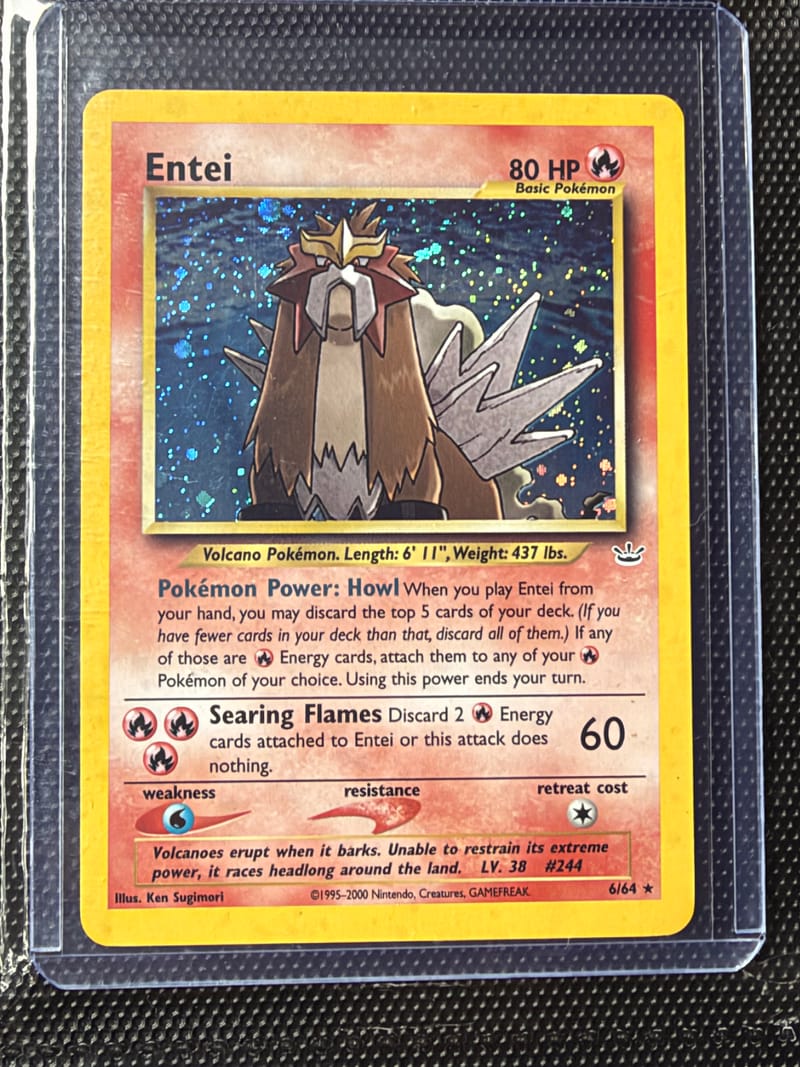
On a holo card, the shiny foil is on the artwork and the rest of the card is flat. On a reverse holo, it is the other way round: the foil covers the card around the artwork, and the picture itself is flat or uses a different pattern. A reverse holo usually shares its card number with the regular print, so in modern sets the number alone can't tell you which one a listing is. The photo and the title have to.
How to tell them apart in a photo
Start with where the shine is. Tilt the card, or watch a seller's video, and see which part catches the light.
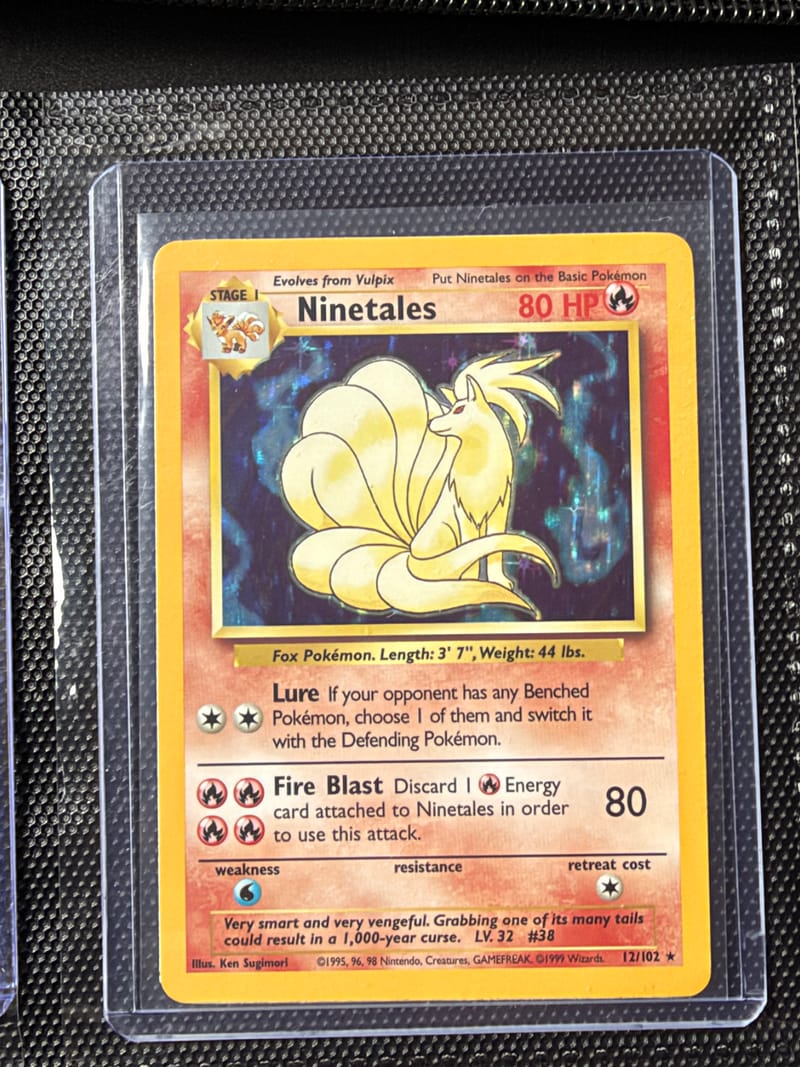
Holo: the art box shines. The text box, the border area and the background around the art are plain.
Reverse holo: the art box is plain, and the rest of the card shines, often with a pattern such as Poke Balls or energy symbols.
Non-holo: nothing shines. This matters most for older sets, where the same Pokemon can come as a holo and a non-holo rare.
A flat photo can hide all of this. Bulbapedia's notes on the Scarlet & Violet holo pattern say it can be hard to see in photographs because it depends on reflected light. When a listing has one straight-on photo, ask for a second at an angle, or a short video.
Two more tells that survive a poor photo:
The card number and rarity symbol. In Jungle and Fossil, the holo and non-holo versions have different numbers. In modern sets they don't, so the number confirms the card but not the foil (see Card number (set number)).
The set symbol, in Scarlet & Violet era sets. Per Bulbapedia, the set symbol on a reverse holo is printed black on white, where the regular print has it white on black. That is often readable even when the foil is not.
How it changed by era
What "holo" and "reverse holo" mean depends on when the card was printed, so place the card in its era before you trust the word in a title.
| Era | Holo | Reverse holo | Same card number? |
|---|---|---|---|
| Wizards of the Coast, Base Set to Neo Destiny (1999-2002) | Holo rares, foil on the art. In Jungle and Fossil, each holo rare also came as a non-holo rare | None | Holo and non-holo have different numbers (Jungle Vaporeon 12/64 holo, 28/64 non-holo) |
| Legendary Collection (2002) | Holo rares | The first English reverse holos, with a "fireworks" pattern, for nearly every card | Yes |
| Expedition (2002) to the Sword & Shield era | Holo rares; non-holo rares as separate cards | Most cards come as a regular print and a reverse holo | Yes. Sword & Shield Rillaboom 14/202 is a holo rare with a reverse holo of the same number |
| Scarlet & Violet era (2023 on) | Every card of rare or higher is foil | Commons, uncommons and rares come in reverse holo; ultra rares and full arts usually don't | Yes. Scarlet & Violet Meowscarada 015/198 comes as a holo and a reverse holo |
The Scarlet & Violet change is why this question comes up so much today. Pokemon announced in December 2022 that every card with a rarity of rare or higher would now be foil, and its support page now says each pack holds three foil cards, at least one of them rare or higher. Before Scarlet & Violet, it guaranteed at least one reverse foil per pack. So in a modern set, a rare often exists as a holo and a reverse holo with the same number, and both are shiny.
Some recent sets go further and print more than one reverse holo pattern. In Prismatic Evolutions, for example, TCGdex lists commons with a plain reverse holo, a Poke Ball pattern and a Master Ball pattern. Collectors treat each pattern as its own version, so check that the pattern in the photo is the one you are after.
Which is rarer, holo or reverse holo?
Neither, as a rule. It depends on the card and the set.
In Wizards-era sets there are no reverse holos at all, and the holo rare was the rarest card a pack could hold. In modern sets, every pack carries reverse holos, so a reverse holo of a common is easy to come by, while a reverse holo of a specific rare is one card among many in its set. Pokemon publishes what a pack contains, not the odds of pulling any one card, so this page puts no number on it.
"Better" is a matter of taste. I collect mostly holos. Some collectors want the holo because it is the version printed with the art shining. Master set collectors need both (see Master set).
How listings name them
Sellers are not consistent. You will see "holo", "holo rare", "holofoil" and "foil" for the holo, and "reverse holo", "rev holo", "RH" and "reverse foil" for the reverse (see Holo rare and Reverse holo). Pattern names such as "Poke Ball reverse" or "Master Ball reverse" turn up for the newer sets.
The catch is that "holo" is part of "reverse holo". A search for a card name plus "holo" also returns its reverse holos, and a seller who writes just "holo" may mean either. Two habits help:
Put the card number in the search, then check the title and the photo for the foil.
To see holos only, exclude the word "reverse". To see reverse holos only, search "reverse holo".
On a ChaseBoard watch, the Holo and Reverse Holo chips add those words to the card's search, and an exclude word of "reverse" keeps reverse holos out of a holo watch. The chips only appear for versions the card was actually printed in.
Holo or non-holo: check the number
In the older sets, the same Pokemon can be a holo and a non-holo rare, and both can carry the 1st Edition stamp. Jungle printed Vaporeon twice: 12/64 is the holo and 28/64 is the non-holo. The stamp tells you the print run, not the foil, so the number is what settles the version. I once bought the non-holo by mistake, thinking it was the holo (the full story). More on the stamp is in 1st Edition vs Shadowless Pokemon Cards.
A checklist before you buy
The card number matches the version you want
You can see which part of the card shines: the art, or everything around it
For a single flat photo: ask for an angled photo or a video
For a Scarlet & Violet era card: check the set symbol (black on white means reverse holo)
For a newer set: the reverse pattern (plain, Poke Ball, Master Ball) matches the one you want
The title says "reverse" when you want the reverse holo, and doesn't when you want the holo
For an older set: the price makes sense for the holo, not only for the non-holo
FAQ
Look at where the foil is. A holo shines on the artwork only. A reverse holo shines everywhere except the artwork. In a photo, tilt or angle shots show it best, and on Scarlet & Violet era cards the reverse holo's set symbol is black on white.
It depends on the card. In early sets there were no reverse holos, and holo rares were the rarest card in a pack. In modern sets every pack has reverse holos, so a reverse holo common is easy to find. Pokemon does not publish pull odds.
Neither is better in general. It comes down to which version you want, or whether you are building a master set, which needs both.
Usually, yes. Since Legendary Collection, a reverse holo has carried the same number as its regular print. That is why the photo and title matter: the number confirms the card, not the foil.
No. The English Wizards sets from Base Set to Neo Destiny had holo and non-holo cards only. The first English reverse holos came in Legendary Collection in 2002.
Related
Sources
- Bulbapedia, Holofoil (patterns and the Reverse Holofoil section), read October 9, 2026
- Pokemon, "Pokemon TCG: Scarlet & Violet Brings Changes to the Pokemon Trading Card Game" (December 9, 2022), read October 9, 2026
- Pokemon Support, "What can I expect in a Pokemon Trading Card Game booster pack?", read October 9, 2026
- TCGdex, Jungle Vaporeon 12/64 (holo), read October 9, 2026
- TCGdex, Jungle Vaporeon 28/64 (non-holo), read October 9, 2026
- TCGdex, Sword & Shield Rillaboom 14/202, read October 9, 2026
- TCGdex, Scarlet & Violet Meowscarada 015, read October 9, 2026
- TCGdex, Prismatic Evolutions Exeggcute 001, read October 9, 2026
- TCGdex, Legendary Collection set, read October 9, 2026
Last reviewed October 9, 2026.
How this page was written: drafted with AI assistance from Lee's own answers, then checked claim by claim against the sources above.
About the author
Lee, founder of ChaseBoard
Lee buys Pokemon cards on eBay and builds ChaseBoard.