Pokemon Card Rarity Symbols Explained
By Lee, founder of ChaseBoard6 min read
Published October 17, 2026. Updated October 17, 2026.
The short answer
The rarity symbol is the small mark next to the card number at the bottom of a Pokemon card. A black circle means common, a black diamond uncommon and a black star rare. Scarlet & Violet sets added more stars: two black stars for Double Rare, two silver stars for Ultra Rare, one gold star for Illustration Rare, two gold stars for Special Illustration Rare and three gold stars for Hyper Rare. The Mega Evolution sets replaced Hyper Rare with Mega Hyper Rare, marked with a four-pointed star.
I'll admit it: the modern rarities still confuse me. Most of my collection is vintage. So this page puts every symbol in one chart, checked against Pokemon's own announcement and its official card database. Keep it open the next time a listing title throws three letters at you.
Where to find the rarity symbol
Look at the bottom of the card, beside the card number (for example 187/132). TCGplayer's help center says the symbol sits at the bottom right or bottom left, depending on the card. On Scarlet & Violet and Mega Evolution cards it is at the bottom left, right after the number.
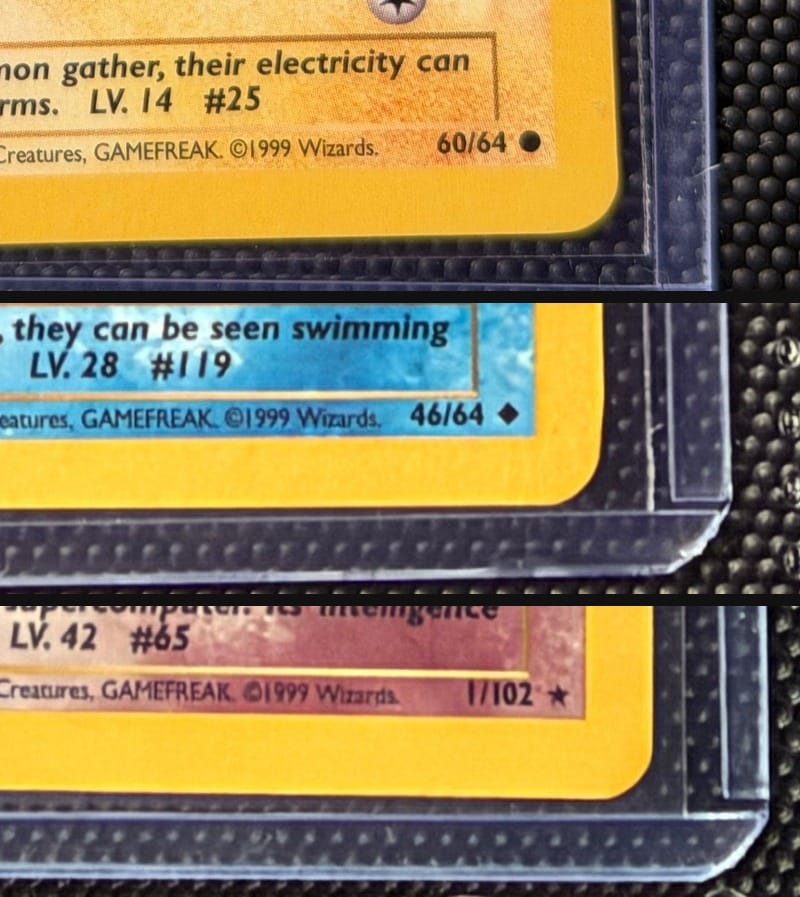
Two kinds of card break the pattern, so don't read them as a missing symbol:
Promos carry a black star with the word PROMO printed over it.
Some cards made for specific products have no rarity symbol. TCGplayer says they show a colored silhouette of the product's main Pokemon instead.
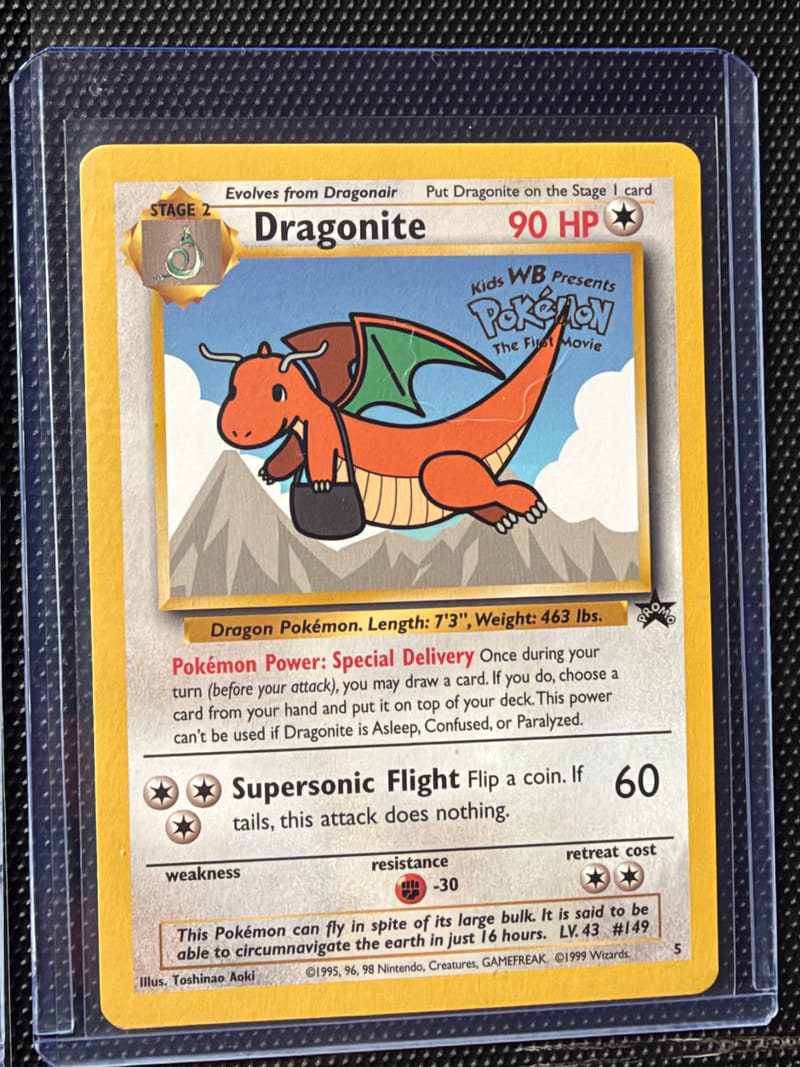
The rarity chart
| Symbol | Rarity name | What it marks | Where you'll see it |
|---|---|---|---|
| Black circle | Common | The lowest rarity tier | Every era |
| Black diamond | Uncommon | The next tier up | Every era |
| Black star | Rare | Rare cards, holo or not (see the next section) | Every era |
| Black star with "PROMO" | Promo | Cards from products and events | Every era |
| Two black stars | Double Rare | Pokemon ex, including Tera Pokemon ex | Scarlet & Violet, Mega Evolution |
| Two silver stars | Ultra Rare | Full-art versions of Pokemon ex, and some Supporters | Scarlet & Violet, Mega Evolution |
| One gold star | Illustration Rare | Full-art, alternate-art versions of common, uncommon and rare Pokemon | Scarlet & Violet, Mega Evolution |
| Two gold stars | Special Illustration Rare | Full-art, alternate-art Pokemon ex and Supporters | Scarlet & Violet, Mega Evolution |
| Three gold stars | Hyper Rare | Full-art cards with gold borders and accents, once called secret rares | Scarlet & Violet |
| One pink star | ACE SPEC Rare | ACE SPEC Trainer and Energy cards, limited to one per deck | Scarlet & Violet, Temporal Forces to Prismatic Evolutions |
| Two stars, one pink, one green | Mega Attack Rare | Seven Mega Evolution Pokemon ex cards, numbered 265 to 271 | Ascended Heroes |
| Four-pointed star with a black outline | Mega Hyper Rare | Gold Mega Evolution Pokemon ex, one or two per set, numbered last | Mega Evolution |
Pokemon's card database lists 27 rarity names in all. The chart covers the ones you'll meet most. A few belong to single sets: Black White Rare (White Flare and Black Bolt), and Pikachu Rare and Futuristic Rare (30th Celebration). Older names such as Rare Holo GX, Rare BREAK, Radiant Rare and Shiny Rare belong to earlier series.
The black star doesn't tell you if it's holo
In the early sets, a holo rare and a regular rare carry the same black star. The only differences are the foil on the artwork and the card number.
That is how I once bought a non-holo Jungle Vaporeon thinking it was the holo (the full story). Jungle has both: Vaporeon 12/64 is the holo, and 28/64 is the non-holo. Both are rare, both carry the black star. TCGplayer's rarity guide describes a rare holo as a black star plus a foil illustration, so the star alone can't settle it.
Before you buy an early card, check the number and look for the foil in the photo. The full comparison is in Holo vs Reverse Holo Pokemon Cards, and the 1st Edition stamp (which is not a rarity) is covered in 1st Edition vs Shadowless Pokemon Cards.
A reverse holo doesn't change any of this either. TCGplayer notes that the reverse holo foil changes only the look of the card, not its rarity or its number (see Reverse holo).
How the Scarlet & Violet stars work
Pokemon introduced the new symbols in 2023, saying they were meant to show the differences in rarity between cards more clearly. The black circle, diamond and star stayed as they were. Everything above them got its own star pattern.
If the stars blur together, use the card number. It shows the order plainly. Cards numbered above the set's printed total are the ones TCGplayer calls secret rares. In Surging Sparks, with 191 cards in the main set, the numbers above 191 run in this order:
Illustration Rares, 192 to 214
Ultra Rares, 215 to 235
Special Illustration Rares, 236 to 246
Hyper Rares, 247 to 252
The Mega Evolution sets follow the same pattern, with one or two Mega Hyper Rares numbered last. In Phantasmal Flames, that is a single card, 130/094.
Keep one thing straight: the symbol is a tier, not a print count. It tells you where a card sits in its set, not how many copies exist. For what makes a card truly scarce, see The Rarest Pokemon Cards, and How We Know. For the Special Illustration Rare in particular, and how it differs from an Illustration Rare in a listing, see Special Illustration Rare (SIR) and alt art.
Before Scarlet & Violet
For most of the game's history, the symbol told you much less. TCGplayer's guide groups cards like Pokemon-EX, GX, V, VMAX and VSTAR as ultra rares, identified by the card itself: the name, the full art, the mechanic. Secret rares are identified by the number, higher than the set total.
So for an older card, don't stop at the symbol. Read the symbol, the name and the number together.
Reading rarity in a listing title
Sellers shorten rarity names in titles: IR, SIR, UR and HR are common, and "alt art" gets used loosely for several of them. A title can be wrong. The number in the photo can't. So search and compare by the card number, not the rarity word.
On ChaseBoard you pick a card from a visual catalog with its number, so a watch follows that exact card, whatever rarity word a seller puts in the title.
FAQ
They show a card's rarity tier within its set. Black circle is common, black diamond uncommon, black star rare. Since Scarlet & Violet, extra stars mark Double Rare, Ultra Rare, Illustration Rare, Special Illustration Rare and Hyper Rare.
A single black star means rare. In early sets it marks both the holo and the non-holo rares, so check the foil and the number. A single gold star is an Illustration Rare, and a single pink star is an ACE SPEC Rare.
In Scarlet & Violet sets, the top tier is Hyper Rare, three gold stars, numbered last. In Mega Evolution sets it is Mega Hyper Rare, the four-pointed star, with one or two per set. The symbol ranks the card within its set; it is not a print count.
The Mega Evolution sets use the circle, diamond and star, then two black stars (Double Rare), two silver stars (Ultra Rare), one gold star (Illustration Rare), two gold stars (Special Illustration Rare) and the Mega Hyper Rare symbol. Ascended Heroes adds Mega Attack Rare.
Find the symbol next to the card number. A black star or any star pattern means rare or above, and a number higher than the set total means a secret rare. Rarity is not the same as demand, so a rare symbol alone doesn't make a card scarce.
Related
Sources
- Pokemon, "Pokemon TCG: Scarlet & Violet Revamps Pokemon TCG Card Aesthetic" (March 30, 2023), read October 9, 2026
- Pokemon, TCG Card Database (rarity filter and card pages), read October 9, 2026
- Pokemon, "Pokemon TCG: Mega Evolution - Pitch Black Product Showcase", read October 9, 2026
- TCGplayer Help Center, "What are the rarities of Pokemon TCG cards?", read October 9, 2026
- TCGdex API, rarity values and set lists, read October 9, 2026
- CGC, "Understanding Pokemon Rarity Symbols and Card Features", read October 9, 2026
Last reviewed October 9, 2026.
How this page was written: drafted with AI assistance from Lee's own answers, then checked claim by claim against the sources above.
About the author
Lee, founder of ChaseBoard
Lee buys Pokemon cards on eBay and builds ChaseBoard.