How to Start Collecting Pokemon Cards as an Adult
By Lee, founder of ChaseBoard7 min read
Published October 17, 2026. Updated October 17, 2026.
The short answer
Start by deciding what you collect: one set, one Pokemon or one era. Then learn the condition and grading terms, set a budget, and buy the specific cards you want as singles rather than hoping to pull them from packs. Before you pay for any single, check what the same card has recently sold for, because the most common early mistake is paying more than you had to.
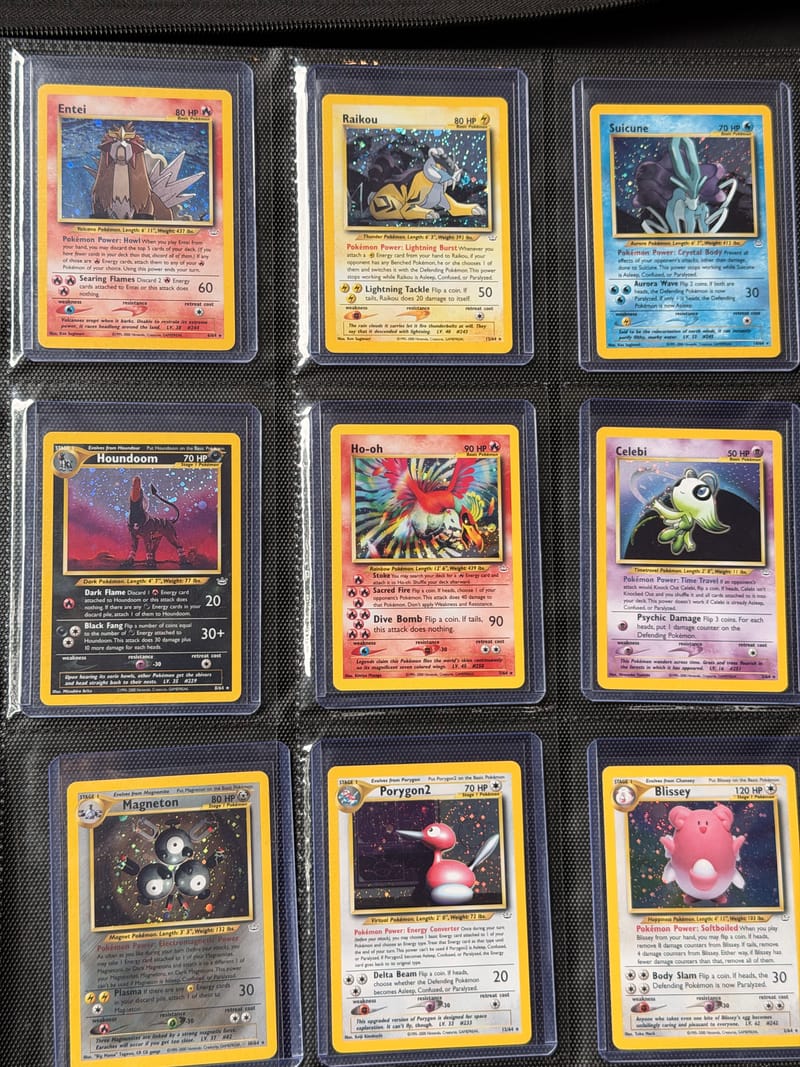
I collected Pokemon cards as a kid. About a year ago, after a 25-year break, a good friend got back into the hobby, and seeing his cards brought the nostalgia back hard. I just love it. I love Pokemon.
Coming back to the hobby as an adult, or starting fresh? Start here.
The first mistake I see: paying too much
The first mistake I see new collectors make is paying too much for cards they could have found online for less. It's easy to do. You find the card you've wanted since you were a kid, the listing is right there, and you buy it.
Three habits stop most of it:
Check sold listings first. An asking price is what a seller hopes for. What the same card, number and grade actually sold for is what buyers paid. Look it up before you pay; the method is in How to Check Pokemon Card Value: Sold Listings.
Compare like with like. A different print, foil or grade is a different card. Match the card number before you compare prices (see Card number (set number)).
Don't buy in a rush. If a listing feels too good, slow down and check it twice. I once rushed a cheap-looking 1st Edition Vaporeon and got the non-holo print instead of the holo (the full story).
Step 1: Choose what to collect
"Pokemon cards" is too big to collect. Pick a lane, and your budget and your attention go to cards you'll actually enjoy. The usual lanes:
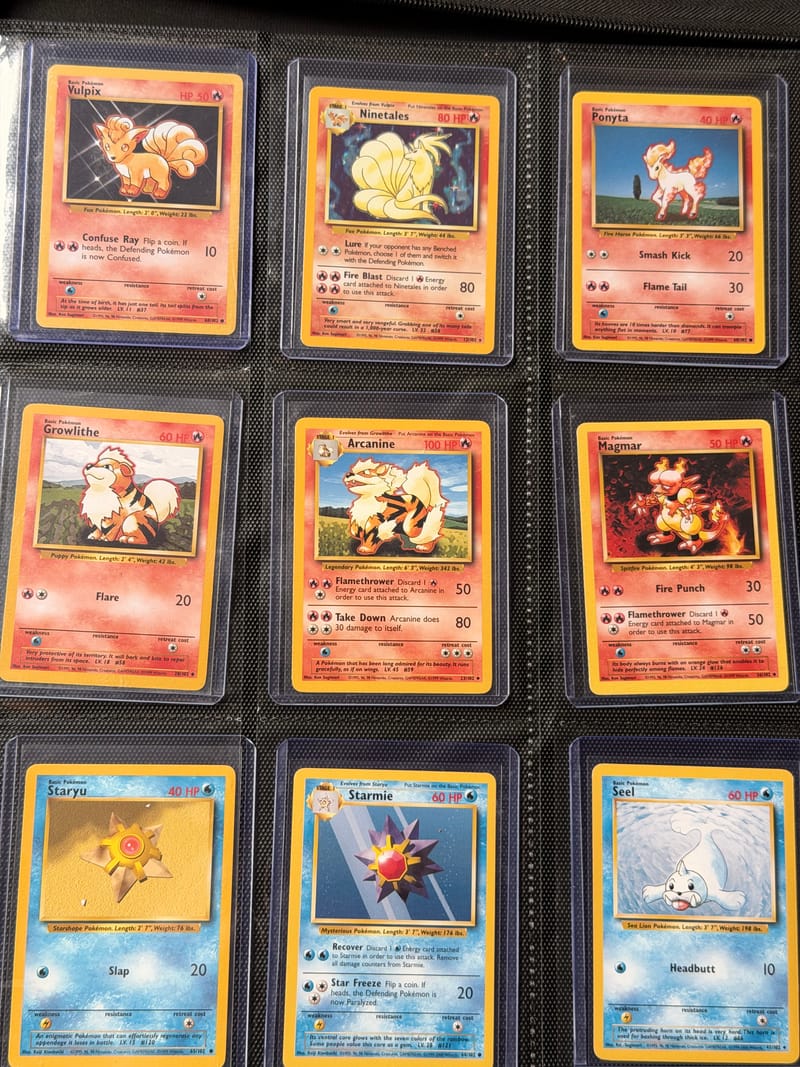
A set. Every card in one expansion, or a master set with every version of every card (see Master set). Most of my own collection is vintage, and I'm close to finishing Base Set in Unlimited, every card number (How to Complete a Pokemon Master Set covers how to set your own rules). Modern sets are big: with its secret rares, Surging Sparks runs to 252 cards.
One Pokemon. Every printing of a favorite, across sets and eras.
An era. The original Wizards of the Coast sets, or one modern series.
A few chase cards. A short list of the cards you want most (see Chase card and Grail card).
Before you commit, open Pokemon's official card database. You can search by card name and filter by expansion, so you can see everything in a set, or every printing of one Pokemon, and know what you're signing up for.
You'll also decide whether you want raw cards, graded cards or both. I collect raw, for fun. The trade-offs are in Raw or Graded Pokemon Cards: Which to Buy?.
Step 2: Learn the words before you spend
Listings are written in collector shorthand, and a misread term is how you end up with the wrong card. Learn these before your first purchase:
| Term | What it means | More |
|---|---|---|
| Raw / graded | Loose card vs a card sealed in a grading company's slab | Graded vs raw cards |
| NM, LP, MP, HP, DMG | The condition scale for raw cards, Near Mint to Damaged | Near Mint and card condition (NM to DMG) |
| PSA 10, CGC 10, BGS 9.5 | A grader's name and grade. The same number differs between graders | PSA vs CGC vs BGS vs TAG for Pokemon Cards |
| Card number | The number at the bottom, like 4/102, that pins down exactly which card it is | Card number (set number) |
| Rarity symbol | The circle, diamond or stars next to the number | Pokemon Card Rarity Symbols Explained |
| 1st Edition, Shadowless | Early print runs of the first sets | 1st Edition vs Shadowless Pokemon Cards |
| Holo, reverse holo | Where the foil is on the card | Holo vs Reverse Holo Pokemon Cards |
| Cert number | The ID on a slab label, to look up on the grader's site | Cert number (certification number) |
To tell which card you're holding, read the card number and find the set symbol. Every English set except the original Base Set has an expansion symbol, TCGplayer's help center notes. On recent cards, the set is a short code in a box at the bottom left.
Step 3: Set a budget, and decide on singles or packs
Pick a monthly amount you're comfortable with and keep to it. Collecting has no finish line, so the budget is what keeps it fun.
Then decide what you spend it on:
Packs are a surprise. A booster pack in a recent set is 10 cards plus a Basic Energy, Pokemon's product page says, and you don't choose which cards you get. Opening them is part of the fun, so budget for them as fun, not as a way to find one card.
Singles are how you get a specific card. If you want one card, buy that card.
Write down the cards you want, with a top price for each. Set each top price from sold listings, not from the listing in front of you, so the decision is made before the temptation shows up.
Step 4: Know where to buy
Sealed product (booster packs, boxes, Elite Trainer Boxes) is sold at the Pokemon Center and wherever Pokemon TCG products are sold, Pokemon says, including local game stores. Pokemon's support page warns that a pack priced far below its suggested retail price is a near-certain sign of a counterfeit. If the deal looks impossible, walk away.
Singles come from marketplaces such as eBay and TCGplayer, from local game stores and from other collectors.
If I could tell myself one thing on day one, it would be this: buy your cards on eBay. It's where I've paid the least for mine.
Online, you're judging a photo, not a card. Read How to Spot a Fake Pokemon Card Before You Buy before your first purchase, and Verify a Graded Pokemon Card Before You Buy before your first slab. On eBay, pay only through eBay's checkout. Its Money Back Guarantee doesn't cover a purchase paid partly outside eBay, so a seller who asks you to pay another way is asking you to give up that protection.
Step 5: Protect what you buy
Wear comes from play, handling and storage, TCGplayer's condition guide says. My rule is simple: every card I care about goes in a sleeve and then a toploader, a rigid plastic holder that keeps it flat. Pokemon's Elite Trainer Boxes, such as the Pitch Black one, come with card sleeves, so you may already have some.
Buy sleeves and toploaders before your first card arrives.
Step 6: Keep track of what you have and what you want
Two lists get long fast: the cards you own and the cards you want.
For the cards you own, use a collection app. Collectr, which I use, describes itself as a place to catalog a collection, with card scanning and value tracking.
For the cards you want, the hard part is noticing when one is listed at your price. That's the problem I built ChaseBoard for. On ChaseBoard, each card you want becomes a tile on a board with your price range, and you get an alert when a listing lands in it. You can start a board without making an account.
A day-one checklist
One lane chosen: a set, a Pokemon, an era or a short chase list
A monthly budget
A written want list with a top price per card, set from sold listings
The condition scale and grading basics learned
Sleeves and toploaders for the cards you care about
Payment only through a marketplace's own checkout
FAQ
Choose a focus (a set, a Pokemon or an era), set a monthly budget, learn the condition and grading terms, and buy the specific cards you want as singles after checking recent sold listings for the same card and grade.
If you enjoy it, yes. Collect for the cards and the fun of it, not on a promise of what they might sell for later: nobody can make that promise.
It's one of the most satisfying ways to collect, if you choose the set with care. Modern sets can run past 250 cards with their secret rares, and a master set adds every reverse holo. An older or smaller set is a gentler first goal.
Packs are random, so buy them for the fun of opening. If you want a specific card, buy the single after checking its sold listings.
Yes. Collectr, for example, lets you catalog your cards and scan them with your phone camera. For the cards you still want, a want list with a top price per card does the same job for buying.
Read the card number at the bottom and find the set symbol or set code. Then search Pokemon's official card database or a marketplace by name and number.
Related
Sources
- Pokemon, TCG Card Database, read October 9, 2026
- Pokemon, "Pokemon TCG: Mega Evolution - Pitch Black Product Showcase", read October 9, 2026
- Pokemon Support, "Did I purchase fake or counterfeit cards?", read October 9, 2026
- TCGplayer Help Center, "How do I identify card sets?", read October 9, 2026
- TCGplayer Help Center, "Card Conditioning Overview", read October 9, 2026
- TCGdex API, Surging Sparks set list, read October 9, 2026
- eBay, Money Back Guarantee policy, read October 9, 2026
- Collectr, read October 9, 2026
Last reviewed October 9, 2026.
How this page was written: drafted with AI assistance from Lee's own answers, then checked claim by claim against the sources above.
About the author
Lee, founder of ChaseBoard
Lee buys Pokemon cards on eBay and builds ChaseBoard.